A weight bench wobbles primarily due to loose fasteners, uneven flooring, improper assembly, or worn parts. Addressing these issues quickly is crucial for maintaining both your performance and safety during strength training. Most wobbles can be resolved with straightforward DIY adjustments, such as tightening bolts or leveling the surface, to restore stability.
Understanding the root cause of the wobble is the first step toward a lasting solution. Several factors, from simple loose parts to structural issues, can contribute to an unstable bench. Identifying these common culprits will guide you in applying the most effective DIY fixes to restore your bench’s rock-solid stability.
Why Your Weight Bench Wobbles
Before diving into solutions, let’s explore the typical reasons a weight bench might become unstable:
- Loose Fasteners: This is arguably the most common cause. Over time, the bolts, nuts, and screws holding your bench together can loosen due to constant vibrations and movement during workouts. This gradual loosening creates play in the joints, leading to a noticeable wobble.
- Uneven Flooring: Your bench might be perfectly sound, but if it sits on an uneven surface—common in garages, basements, or older homes—it will inevitably wobble. Even slight variations in floor height can cause one leg to lift, creating instability.
- Improper Assembly: If your bench was recently set up or moved, incorrect assembly is a frequent culprit. Bolts tightened unevenly, parts misaligned, or the entire bench assembled on an uneven surface can lead to structural imbalance from the start.
- Worn or Damaged Parts: The feet, rubber caps, plastic end caps, or even internal hinges and adjustment mechanisms can wear out, crack, or become damaged over extended use. This wear and tear can compromise the bench’s contact with the floor or its structural integrity, leading to wobbling.
- Manufacturing Defects: In rare cases, the issue might stem from original manufacturing. Poor quality control can result in slightly uneven components or weak joints that contribute to instability, even if the bench is new and assembled correctly.
5 Quick DIY Fixes for a Wobbly Weight Bench
Fortunately, most weight bench wobbles can be resolved with a few straightforward DIY adjustments.
1. Tighten All Bolts and Screws
This is your first and most effective line of defense. Over time, even tightly fastened bolts can work themselves loose. Grab the appropriate tools—usually an Allen key set or a socket wrench—and systematically go over every single bolt and screw on your bench. Pay particular attention to the frame, base, adjustable mechanisms, and areas connecting the seat and backrest.
A critical tip for tightening: rather than just cranking down on whatever feels loose, it’s often more effective to slightly loosen all major bolts on the frame first. Then, place the bench on a known level surface. With the bench correctly oriented and settled, begin to re-tighten the bolts in an alternating or criss-cross pattern. This method helps the frame settle into its natural, stable position before final tightening, preventing uneven stress that can cause future wobbles. Tighten them firmly, but avoid over-tightening, which can strip threads or damage components.
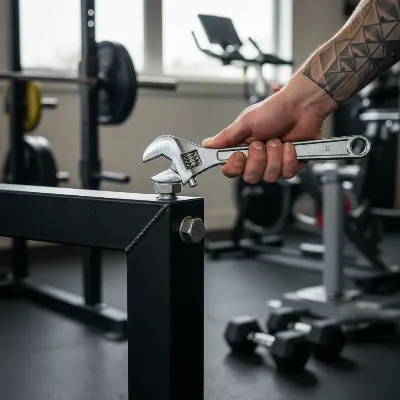 Close-up of a hand tightening bolts on a weight bench frame for stability
|
Our Picks for the Best Weight Bench in 2026
As an Amazon Associate I earn from qualifying purchases.
|
||
| Num | Product | Action |
|---|---|---|
| 1 | Yoleo Adjustable Weight Bench, 660LB Foldable Workout Bench with Extended Head/Neck Protection/Spine Support for Bench Press, Fast Folding Incline Decline Flat Bench |

|
| 2 | Adjustable Weight Bench - 1000LBS Capacity Heavy Duty Foldable Workout Bench for Full Body Exercise, Flat/Incline/Decline, Bench Press for Home Gym with Preacher Pad & Leg Extension |
|
| 3 | Yoleo Adjustable Weight Bench for Full Body Workout; Foldable Bench Press Bench of Home Gym Strength Training; Incline Decline Flat Utility Workout Bench with Quick Folding& Fast Adjustment (Black) |
|
| 4 | Assemble-Free Foldable Weight Bench Press for Home Gym, 660 LBS Capacity Incline Decline, Sit-up Bench for Full-Body Strength Training |
|
| 5 | Marcy Multi-Purpose Adjustable Workout Utility Weight Bench for Full Body Upright, Incline, Decline, and Flat Exercise SB-228 , 42.00 x 26.00 x 48.00 inches, Black |
|
| 6 | Amazon Basics Adjustable Workout Weight Bench Press, Foldable for Home Gym, Black |
|
| 7 | CAP Barbell Multi-Purpose Adjustable Utility Strength Training Weight Bench | Multiple Options |
|
| 8 | Adjustable Weight Bench for Home Gym, Foldable Workout Bench for Full Body Fitness Dumbbell Exercise, 600LBS Incline Decline Flat Bench with Resistance Bands for Strength Training |
|
| 9 | Marcy Exercise Utility Bench for Upright, Incline, Decline, and Flat Exercise SB-261W , Black , 42.00 x 19.00 x 51.00 inches |
|
| 10 | Adjustable Weight Bench, Foldable Workout Benches for Home Gym, 10 Backrest Position Exercise Bench for Strength Training, Upgraded Thickened Steel Support Max Capacity 700LBs |
|
2. Address Uneven Surfaces
If your floor isn’t perfectly flat, the bench will naturally rock. Start by testing different locations in your workout space to find the most level spot. If relocating isn’t an option, or if the floor still presents issues, there are several simple solutions:
- Gym Mats: A thick, high-density exercise mat or a section of interlocking gym flooring can help level out minor discrepancies in your floor and provide a consistent, non-slip surface for your bench.
- Shims: For more pronounced unevenness, use small wooden shims, rubber pads, or even stacked pieces of cardboard underneath the offending leg(s). Test the bench after each addition to ensure stability.
- Adjustable Feet: Some higher-quality benches come with adjustable leveling feet. If yours does, simply twist these feet up or down to compensate for an uneven floor until all four points make solid contact.
3. Re-Assemble Your Bench Correctly
If the wobble appeared shortly after assembly or after moving your bench, chances are the initial setup wasn’t ideal. As mentioned in the first fix, the order and tightness of bolts during assembly are crucial.
The best practice is to assemble the bench with all bolts finger-tight while the bench is upside down (legs facing up). Then, flip the bench right-side up onto the exact level surface where it will be used. Once it’s resting on its feet, progressively tighten all bolts using an alternating pattern until they are secure. This ensures the frame settles correctly under its own weight and the forces of gravity, resulting in a balanced and stable structure.
4. Inspect and Replace Worn Feet or Parts
Over time, the protective caps or feet on your bench legs can wear down, crack, or even fall off, exposing the bare metal frame to the floor. This not only creates instability but can also damage your flooring.
Regularly inspect the bottom of your bench’s legs for any signs of wear, damage, or missing components. Replacement rubber caps or plastic end plugs are typically inexpensive and readily available online or from the manufacturer. Simply remove any remaining damaged parts and snap or press the new ones into place. Also, check adjustable pins, hinges, and attachment points for any visible damage or excessive play. If a part looks compromised, replacing it can often restore stability.
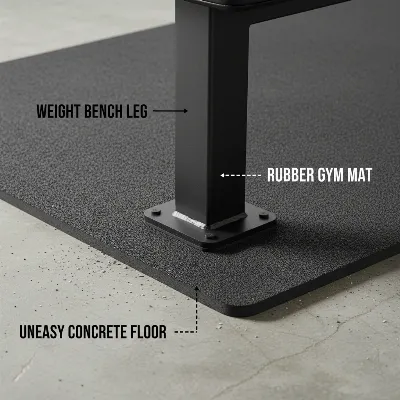 Weight bench leg resting on a gym mat to correct unevenness
5. Consider Thread Locker for Stubborn Bolts
If you have a particular bolt or two that consistently loosen despite repeated tightening, a small amount of thread-locking fluid can be a major upgrade. These chemical adhesives prevent fasteners from vibrating loose.
Apply a small drop of removable thread locker (often blue in color, indicating it can be disassembled with hand tools) to the threads of the bolt before re-tightening it. Allow it to cure according to the product’s instructions. This creates a secure bond that resists loosening from vibrations, ensuring that your bench remains stable through countless workouts.
A stable weight bench is non-negotiable for safe and effective strength training. By systematically checking for loose fasteners, addressing uneven surfaces, ensuring proper assembly, replacing worn parts, and utilizing thread locker when necessary, you can quickly and easily eliminate wobbles. These DIY fixes will help you regain confidence in your equipment, allowing you to focus purely on your lifts and achieve your fitness goals without distraction or concern.
Frequently Asked Questions
What are the main reasons a weight bench might wobble?
A weight bench typically wobbles due to loose fasteners, an uneven floor surface, incorrect assembly, or worn-out parts like rubber feet. Manufacturing defects can also be a rare cause of instability.
How can I fix a wobbly weight bench on an uneven floor?
To fix a wobbly weight bench on an uneven floor, you can use high-density gym mats to create a level surface, place small shims or rubber pads under the shorter leg(s), or adjust any built-in leveling feet if your bench has them.
Is it safe to use a weight bench that wobbles?
No, it is not safe to use a wobbly weight bench. Instability compromises your form, disrupts focus, and significantly increases the risk of injury during strength training exercises. Always ensure your bench is stable before use.
When should I consider using thread locker on my weight bench?
You should consider using a removable thread locker (like blue Loctite) if specific bolts on your weight bench consistently loosen despite repeated tightening. Apply a small drop to the bolt threads before re-tightening to secure them against vibrations.
What tools do I need to fix a wobbly weight bench?
To fix a wobbly weight bench, you will typically need an Allen key set or a socket wrench to tighten bolts and screws. For leveling, you might need gym mats, wooden shims, or rubber pads. Inspecting parts may require no tools.
Fix a Wobbly Weight Bench
Learn how to quickly and effectively fix a wobbly weight bench using five common DIY methods to ensure safety and stability during your workouts.
Systematically go over every bolt and screw on your bench with an Allen key or socket wrench. For best results, slightly loosen all major frame bolts, place the bench on a level surface, then re-tighten them in an alternating pattern to ensure the frame settles correctly.
If your floor is uneven, use high-density gym mats to create a level base. Alternatively, place small wooden shims or rubber pads under the shorter leg(s) until the bench is stable. Some benches have adjustable feet that can be twisted to compensate for unevenness.
If the wobble is new, disassemble the bench and re-assemble it with all bolts finger-tight while the bench is upside down. Flip it right-side up onto its intended level surface, then progressively tighten all bolts in an alternating pattern to ensure a balanced structure.
Regularly check the bottom of your bench legs for worn, cracked, or missing rubber caps or plastic end plugs. Replace any damaged components with new ones, which are typically inexpensive and readily available. Also, inspect adjustable pins and hinges for damage.
For bolts that repeatedly loosen, apply a small drop of removable thread-locking fluid (e.g., blue Loctite) to the threads before re-tightening. Allow it to cure according to product instructions to create a secure bond that resists vibrations.

This was super helpful! I thought my bench was just cheap, but after reading about improper assembly, I realized I probably rushed putting it together. I re-checked all the connections and found one part that wasn’t quite seated right. Now it’s much more secure and I feel safer doing heavy lifts. Thanks for the detailed breakdown!
I was about to buy a new bench because mine was wobbling like crazy, especially during incline presses. This guide saved me! Turns out, it was just a few loose bolts I hadn’t even thought to check. A quick tighten and it feels much more stable now. Definitely worth a read if your bench is feeling a bit shaky.
My bench has always had a slight wobble, even since I got it. I tried tightening all the fasteners like suggested, and it helped a little, but it’s still not perfectly solid. I think my issue might be uneven flooring, which is harder to fix. Good tips overall, but didn’t completely solve my specific problem.
My old bench started wobbling badly, making me nervous during dumbbell rows. I followed the advice about checking for worn parts, and sure enough, one of the rubber feet was completely gone. Replaced it with a furniture pad and the stability is back to normal. Simple fix that made a huge difference for my home gym workouts.