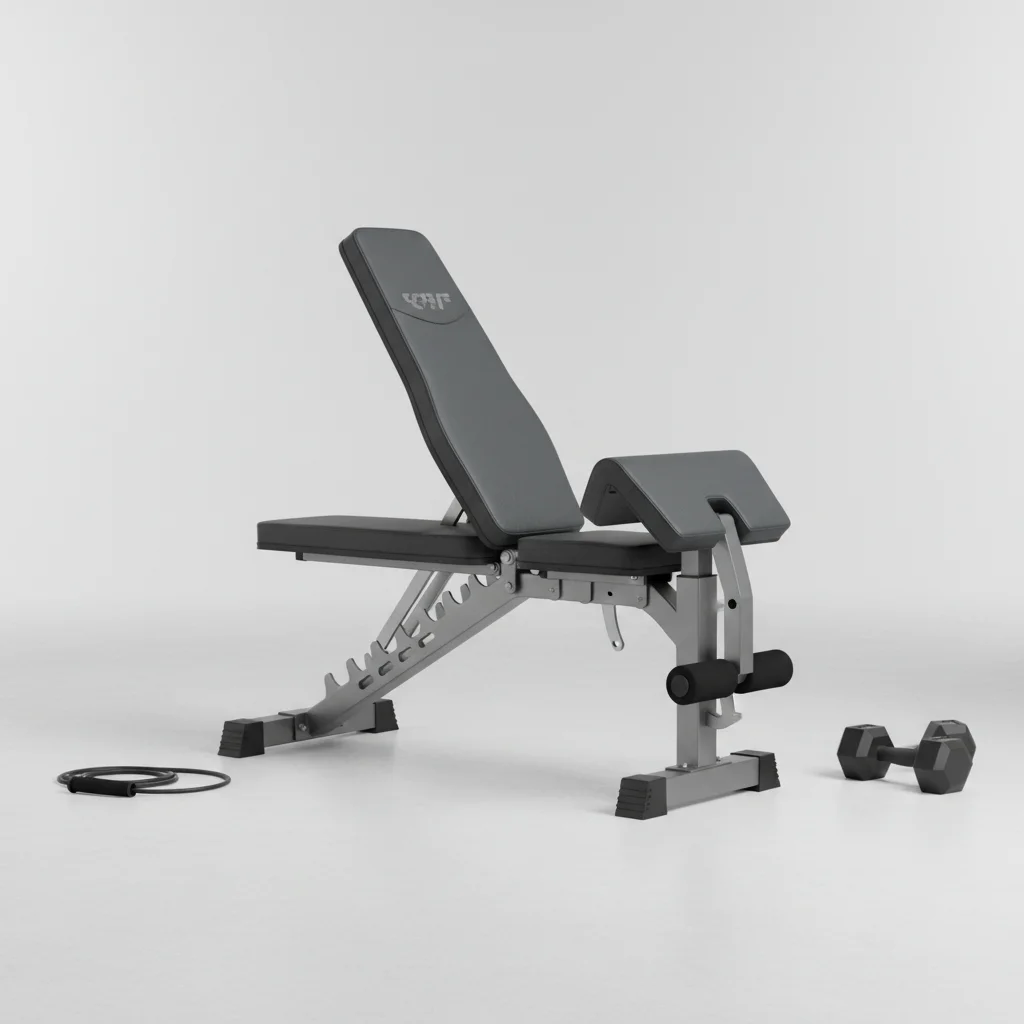
When selecting a weight bench for your home gym, the number of adjustable angles is a critical factor influencing workout versatility. Most home gym enthusiasts will find that a bench offering at least 6 to 8 distinct angles, including flat, incline, and decline positions, provides sufficient range for a comprehensive strength training regimen. This range allows for targeting various muscle groups effectively, from chest and shoulders to core and triceps, without needing multiple specialized benches.
Understanding Flat, Incline, and Decline Angles
A flat weight bench is fundamental for exercises like dumbbell presses, flyes, and rows, providing a stable base. Incline angles, typically ranging from 15 to 85 degrees, are crucial for targeting the upper chest and front deltoids. A good adjustable bench will offer several incline increments to allow for subtle variations in muscle activation. Decline angles, usually between -10 and -30 degrees, are less common but valuable for lower chest development and certain abdominal exercises. A bench that can transition smoothly between these positions enhances the overall utility of your home gym setup.
Why More Angles Aren’t Always Better
While a wide range of angles seems appealing, an excessive number of adjustment points can sometimes lead to unnecessary complexity or compromise stability. Benches with too many small increments might feel less secure at certain angles or take longer to adjust between sets. Focus on benches that offer distinct, functional angles rather than just a high count. For example, a bench with a solid 0, 30, 45, 60, and 80-degree incline, plus a -15-degree decline, is often more practical than one with 15 different 5-degree increments.
Key Angles for Diverse Workouts
|
Our Picks for the Best Weight Bench in 2026
As an Amazon Associate I earn from qualifying purchases.
|
||
| Num | Product | Action |
|---|---|---|
| 1 | Marcy Multi-Purpose Adjustable Workout Utility Weight Bench for Full Body Upright, Incline, Decline, and Flat Exercise SB-228 , 42.00 x 26.00 x 48.00 inches, Black |

|
| 2 | Yoleo Adjustable Weight Bench, 660LB Foldable Workout Bench with Extended Head/Neck Protection/Spine Support for Bench Press, Fast Folding Incline Decline Flat Bench |
|
| 3 | Marcy Exercise Utility Bench for Upright, Incline, Decline, and Flat Exercise SB-261W , Black , 42.00 x 19.00 x 51.00 inches |
|
| 4 | Adjustable Weight Bench for Home Gym, Foldable Workout Bench for Full Body Fitness Dumbbell Exercise, 600LBS Incline Decline Flat Bench with Resistance Bands for Strength Training |
|
| 5 | CAP Barbell Multi-Purpose Adjustable Utility Strength Training Weight Bench | Multiple Options |
|
| 6 | Amazon Basics Adjustable Workout Weight Bench Press, Foldable for Home Gym, Black |
|
| 7 | Yoleo Adjustable Weight Bench for Full Body Workout; Foldable Bench Press Bench of Home Gym Strength Training; Incline Decline Flat Utility Workout Bench with Quick Folding& Fast Adjustment (Black) |
|
| 8 | Assemble-Free Foldable Weight Bench Press for Home Gym, 660 LBS Capacity Incline Decline, Sit-up Bench for Full-Body Strength Training |
|
| 9 | Adjustable Weight Bench - 1000LBS Capacity Heavy Duty Foldable Workout Bench for Full Body Exercise, Flat/Incline/Decline, Bench Press for Home Gym with Preacher Pad & Leg Extension |
|
| 10 | Adjustable Weight Bench, Foldable Workout Benches for Home Gym, 10 Backrest Position Exercise Bench for Strength Training, Upgraded Thickened Steel Support Max Capacity 700LBs |
|
To maximize your home gym’s potential, ensure your weight bench supports these essential angles:
- Flat (0 degrees): Essential for bench presses, dumbbell rows, and various core exercises.
- Low Incline (15-30 degrees): Targets the lower portion of the upper chest.
- Mid Incline (45 degrees): Standard for upper chest and shoulder presses.
- High Incline (60-80 degrees): Primarily for shoulder presses and front deltoid isolation.
- Decline (-10 to -20 degrees): Useful for lower chest emphasis and specific abdominal crunches.
Having these core angles ensures you can perform a wide array of exercises with proper form and muscle engagement.
Stability and Ease of Adjustment
Beyond the sheer number of angles, consider the stability of the bench at each position and how easily it adjusts. A robust locking mechanism is paramount to prevent accidents and ensure confidence during heavy lifts. Pin-and-ladder systems or pop-pin adjustments are common; evaluate which system feels most secure and intuitive for your needs. A bench that wobbles or is difficult to reconfigure will detract from your workout experience, regardless of its angle capabilities. Look for heavy-gauge steel construction and a wide base for optimal stability.
Considering Your Training Goals
Your personal fitness goals should heavily influence your choice. If you primarily focus on powerlifting, a sturdy flat bench might suffice, or one with minimal incline options. However, for general fitness, bodybuilding, or functional training, a highly adjustable bench is invaluable. It allows for progressive overload across different muscle fibers and keeps your workouts varied and engaging. For instance, if you plan to incorporate a lot of dumbbell work, the ability to hit multiple incline angles will be a significant advantage.Investing in a bench that aligns with your long-term training aspirations will prevent the need for an upgrade down the line.
