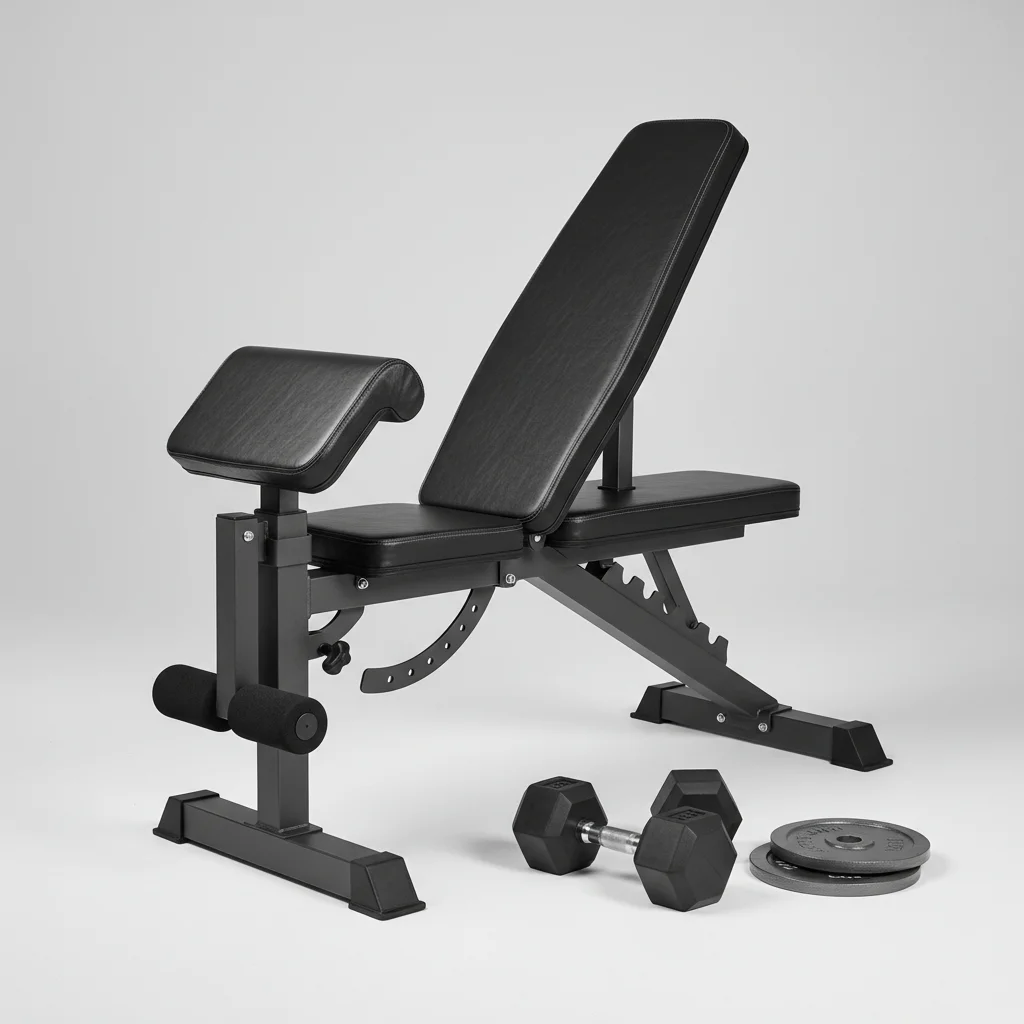
When selecting a weight bench for heavy lifters, the most critical factor is its weight capacity, which should ideally be at least 1,000 pounds. This ensures the bench can safely support both the user’s body weight and the substantial loads involved in heavy lifting. Beyond capacity, look for robust construction, a wide and stable base, and high-density padding to provide both safety and comfort during intense workouts.
Understanding Weight Capacity and Construction
For heavy lifters, the weight capacity of a bench is non-negotiable. Many standard benches are rated for 600-800 pounds, which might seem sufficient, but this often includes the user’s body weight. A true heavy-duty bench will specify a static weight capacity of 1,000 pounds or more, accounting for both the lifter and the heaviest dumbbells or barbells. This capacity is typically achieved through the use of thick-gauge steel frames, often 11-gauge or lower, and reinforced welding at all stress points. Inspect the frame for solid, continuous welds rather than spot welds, which can be weaker under extreme pressure. The frame’s tubing should also be substantial, usually 2×3 inches or larger, to prevent flexing or bending.
Stability and Base Design
A stable base is paramount for safety when lifting heavy. Look for benches with a wide footprint, meaning the base legs extend significantly beyond the main body of the bench. This wider stance distributes weight more effectively and prevents tipping, especially during exercises like incline presses or dumbbell rows where the weight distribution can shift. Rubberized feet are also crucial, not just to protect your floor but to prevent the bench from sliding during heavy sets. Some premium benches feature adjustable feet to compensate for uneven garage or basement floors, further enhancing stability. Avoid benches with narrow or flimsy bases, as these can introduce dangerous wobbling under heavy loads.
Padding and Upholstery for Comfort and Durability
|
Our Picks for the Best Weight Bench in 2026
As an Amazon Associate I earn from qualifying purchases.
|
||
| Num | Product | Action |
|---|---|---|
| 1 | Yoleo Adjustable Weight Bench, 660LB Foldable Workout Bench with Extended Head/Neck Protection/Spine Support for Bench Press, Fast Folding Incline Decline Flat Bench |

|
| 2 | Marcy Multi-Purpose Adjustable Workout Utility Weight Bench for Full Body Upright, Incline, Decline, and Flat Exercise SB-228 , 42.00 x 26.00 x 48.00 inches, Black |
|
| 3 | Assemble-Free Foldable Weight Bench Press for Home Gym, 660 LBS Capacity Incline Decline, Sit-up Bench for Full-Body Strength Training |
|
| 4 | Adjustable Weight Bench - 1000LBS Capacity Heavy Duty Foldable Workout Bench for Full Body Exercise, Flat/Incline/Decline, Bench Press for Home Gym with Preacher Pad & Leg Extension |
|
| 5 | CAP Barbell Multi-Purpose Adjustable Utility Strength Training Weight Bench | Multiple Options |
|
| 6 | Adjustable Weight Bench for Home Gym, Foldable Workout Bench for Full Body Fitness Dumbbell Exercise, 600LBS Incline Decline Flat Bench with Resistance Bands for Strength Training |
|
| 7 | Adjustable Weight Bench, Foldable Workout Benches for Home Gym, 10 Backrest Position Exercise Bench for Strength Training, Upgraded Thickened Steel Support Max Capacity 700LBs |
|
| 8 | Amazon Basics Adjustable Workout Weight Bench Press, Foldable for Home Gym, Black |
|
| 9 | Marcy Exercise Utility Bench for Upright, Incline, Decline, and Flat Exercise SB-261W , Black , 42.00 x 19.00 x 51.00 inches |
|
| 10 | Yoleo Adjustable Weight Bench for Full Body Workout; Foldable Bench Press Bench of Home Gym Strength Training; Incline Decline Flat Utility Workout Bench with Quick Folding& Fast Adjustment (Black) |
|
While often overlooked, the quality of the padding and upholstery significantly impacts both comfort and the longevity of a heavy-duty weight bench. High-density foam, typically 2-3 inches thick, is essential to provide firm support without compressing excessively under heavy weight. This prevents discomfort and potential injury to the spine and shoulders. The upholstery should be made from durable, tear-resistant material like commercial-grade vinyl, which can withstand repeated use and resist sweat and abrasion. Double-stitched seams are a good indicator of quality and will prevent the upholstery from tearing or splitting over time. Thin, soft padding will quickly break down and offer inadequate support for heavy lifting.
Adjustability and Versatility for Diverse Workouts
Even for heavy lifters, versatility is a valuable asset. An adjustable bench that can transition between flat, incline, and decline positions allows for a wider range of exercises, targeting different muscle groups. Look for a robust adjustment mechanism, often a ladder-style or pop-pin system, that locks securely into place without any play. The adjustment points should be clearly marked and easy to operate, even with heavy dumbbells nearby. Some heavy-duty benches offer a wide range of incline angles, including military press positions, which can be beneficial for shoulder development. Ensure that the adjustment points are also constructed from heavy-gauge steel to prevent wear and tear under frequent, heavy use.
- Minimum 1,000 lb weight capacity: Essential for supporting heavy loads and lifter’s weight.
- Thick-gauge steel frame (11-gauge or lower): Ensures structural integrity and prevents bending.
- Wide, stable footprint: Prevents tipping and enhances safety during dynamic movements.
- High-density, 2-3 inch foam padding: Provides firm support and prevents discomfort.
- Durable, commercial-grade vinyl upholstery: Resists tears, sweat, and abrasion for long-term use.
Key Features to Prioritize
When making your final selection, prioritize benches that explicitly state their static weight capacity and provide details about their frame construction. Read reviews from other heavy lifters to gauge real-world performance and durability. Consider the brand’s reputation for quality and customer service. While a higher price often correlates with better quality in this category, it’s an investment in your safety and long-term training success. A well-built heavy-duty bench will last for years, enduring countless intense workouts without compromise.

I appreciate the emphasis on weight capacity, but I found it a bit hard to find benches that explicitly state a 1,000+ pound static capacity without being super expensive. I ended up getting one that’s rated for 800 lbs, which is okay for now, but I do notice a slight give when I’m really pushing it. Wish there were more affordable options in the true heavy-duty range.
Great advice on what to look for! I used to think all benches were pretty much the same until I started getting into heavier lifting. The point about thick-gauge steel framing really resonated with me. My new bench has that and it makes a huge difference in stability. The padding is also super comfortable, which is a bonus during longer sessions.
I’ve been lifting for years and finally decided to upgrade my home gym setup. This guide really helped me focus on the right features. My old bench felt wobbly with anything over 300 lbs, but the new one I got, rated for 1,000 pounds, is a game-changer. It feels incredibly solid even when I’m doing heavy dumbbell presses. Definitely worth investing in a high-capacity bench.
This was exactly what I needed! I was about to buy a cheaper bench, but after reading about the importance of a wide and stable base, I changed my mind. The stability makes such a difference, especially when you’re lifting heavy and need to feel secure. It’s made my workouts much safer and more effective. Highly recommend paying attention to these details.