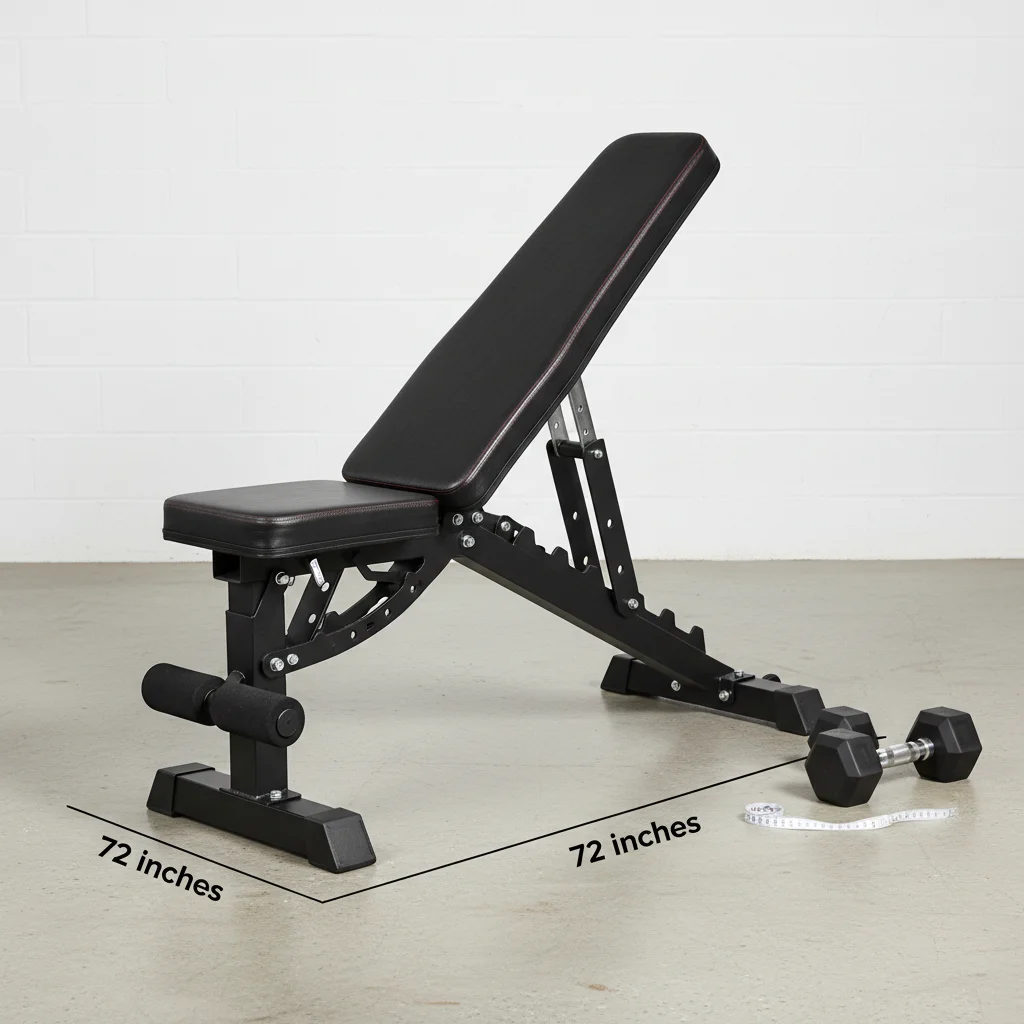
When selecting a weight bench for your garage gym, the ideal footprint largely depends on the available space and your training goals. Most standard flat benches require a minimum area of 2 feet by 4 feet, while adjustable benches can demand up to 3 feet by 6 feet when fully extended or declined. Considering the surrounding space for movement and exercises, a practical minimum area for a single bench setup is approximately 5 feet by 7 feet.
Assessing Your Garage Space for a Weight Bench
Before purchasing, accurately measure the dedicated area in your garage. Account for any existing equipment like squat racks, barbells, or storage units. Remember to factor in clearance for movement around the bench, especially for exercises like dumbbell presses or when spotting. A common mistake is underestimating the space needed for full range of motion, which can lead to cramped and unsafe workouts. Consider the height of your garage ceiling as well, particularly if you plan on using the bench for overhead presses or if it has an incline feature that raises the backrest significantly.
Flat Benches vs. Adjustable Benches: Footprint Differences
Flat weight benches typically have the smallest footprint, making them ideal for very tight spaces. They offer a stable platform for exercises like bench presses, dumbbell rows, and step-ups. An average flat bench measures around 48 inches long by 12 inches wide, with a height of 17-18 inches. Adjustable benches, while more versatile, generally require more space. When fully reclined or inclined, their length can extend, and the base often widens for stability. Some adjustable benches also feature wheels for easier movement, which can be beneficial in a multi-purpose garage gym.
Considering Foldable and Stowable Weight Benches
|
Our Picks for the Best Weight Bench in 2026
As an Amazon Associate I earn from qualifying purchases.
|
||
| Num | Product | Action |
|---|---|---|
| 1 | Adjustable Weight Bench for Home Gym, Foldable Workout Bench for Full Body Fitness Dumbbell Exercise, 600LBS Incline Decline Flat Bench with Resistance Bands for Strength Training |

|
| 2 | Marcy Exercise Utility Bench for Upright, Incline, Decline, and Flat Exercise SB-261W , Black , 42.00 x 19.00 x 51.00 inches |
|
| 3 | Marcy Multi-Purpose Adjustable Workout Utility Weight Bench for Full Body Upright, Incline, Decline, and Flat Exercise SB-228 , 42.00 x 26.00 x 48.00 inches, Black |
|
| 4 | CAP Barbell Multi-Purpose Adjustable Utility Strength Training Weight Bench | Multiple Options |
|
| 5 | Yoleo Adjustable Weight Bench for Full Body Workout; Foldable Bench Press Bench of Home Gym Strength Training; Incline Decline Flat Utility Workout Bench with Quick Folding& Fast Adjustment (Black) |
|
| 6 | Adjustable Weight Bench, Foldable Workout Benches for Home Gym, 10 Backrest Position Exercise Bench for Strength Training, Upgraded Thickened Steel Support Max Capacity 700LBs |
|
| 7 | Adjustable Weight Bench - 1000LBS Capacity Heavy Duty Foldable Workout Bench for Full Body Exercise, Flat/Incline/Decline, Bench Press for Home Gym with Preacher Pad & Leg Extension |
|
| 8 | Amazon Basics Adjustable Workout Weight Bench Press, Foldable for Home Gym, Black |
|
| 9 | Assemble-Free Foldable Weight Bench Press for Home Gym, 660 LBS Capacity Incline Decline, Sit-up Bench for Full-Body Strength Training |
|
| 10 | Yoleo Adjustable Weight Bench, 660LB Foldable Workout Bench with Extended Head/Neck Protection/Spine Support for Bench Press, Fast Folding Incline Decline Flat Bench |
|
For garage gyms with limited space or those that double as parking areas, foldable or stowable weight benches are an excellent solution. These benches are designed to be compact when not in use, often folding flat or standing upright to minimize their footprint. While they offer convenience, it’s important to check their stability and weight capacity, as some lighter models might compromise on these aspects. Always prioritize a model that provides a secure and stable platform for your heaviest lifts, even if it’s foldable. Look for robust locking mechanisms and sturdy frame construction.
The Impact of Attachments on Weight Bench Footprint
Some weight benches come with or can accommodate attachments like leg developers, preacher curl pads, or even dip stations. While these attachments enhance the versatility of your bench, they significantly increase the overall footprint. A leg developer, for instance, can add an extra 2-3 feet to the length of your bench setup. If you plan on using such attachments, ensure you have ample space to operate them safely and effectively without bumping into walls or other equipment. Consider whether these attachments are truly essential for your training goals or if separate, dedicated equipment might be a better use of your space.
- Measure your available garage space accurately, including height.
- Account for movement clearance around the bench during exercises.
- Consider the extended dimensions of adjustable benches when inclined/declined.
- Evaluate foldable benches for stability and weight capacity.
- Factor in the additional footprint of any planned attachments.
Optimizing Your Garage Gym Layout
Beyond the bench itself, think about the overall layout of your garage gym. Placing your weight bench strategically can maximize your usable space. For example, positioning it against a wall when not in use, or near a squat rack if you plan to use it for bench pressing within the rack. Good organization, such as wall-mounted storage for dumbbells and plates, can free up floor space around your bench. Remember that a well-organized gym is not only more efficient but also safer.

This was super helpful for planning my garage gym. I almost made the mistake of just measuring the bench itself and forgetting about the clearance for movement. The tip about accounting for existing equipment like squat racks was also key. My new bench fits great, and I don’t feel like I’m going to hit the wall during my lifts.
I appreciated the breakdown of standard flat vs. adjustable bench footprints. I went with an adjustable one, thinking it would be more versatile. While it’s great for different angles, it definitely takes up more space than the 3×6 feet mentioned when fully declined, especially with my height. Just something to keep in mind if your garage is on the smaller side.
I was really struggling with finding a bench that fit my small garage gym without feeling cramped. This guide on measuring the 5×7 foot practical minimum area was a game-changer. I ended up getting a flat bench, and it fits perfectly with enough room to move around for dumbbell presses. Super happy with my setup now!
I’ve been wanting to add a weight bench to my garage for ages but was always worried about space. The detailed advice on how to assess your garage space and factor in full range of motion really helped me visualize the setup. I feel much more confident in my purchase now, knowing it will be safe and comfortable.