An adjustable weight bench is a cornerstone of any home gym, offering versatility for a wide range of exercises. However, nothing disrupts a focused workout or compromises safety more than a wobbly bench. When your bench starts to rock or sway, it can undermine your stability, affect your form, and significantly increase the risk of injury. Fortunately, most wobbling issues can be swiftly resolved with some basic DIY troubleshooting and a few common tools. This guide will walk you through identifying the root cause of instability and provide effective, fast fixes to get your bench rock-solid again.
I. Understanding the Wobble: Common Causes
Before you can fix a wobbly adjustable weight bench, it’s essential to understand why it’s wobbling. Several factors can contribute to instability, ranging from simple fixes to more structural issues. Identifying the correct cause will direct you to the most efficient solution.
A. Loose Fasteners
This is by far the most frequent culprit. Over time, the bolts, nuts, and screws holding your adjustable weight bench together can gradually loosen due to constant vibrations, movement, and the stresses of heavy lifting. This is especially true for adjustable parts like the backrest and seat mechanisms, which are frequently repositioned. A loose connection at any joint can translate into a noticeable wobble across the entire bench.
B. Uneven Flooring
Even the highest quality bench will feel unstable on an uneven surface. Many home gyms are set up in basements, garages, or rooms with slightly sloped or irregular flooring. Hard surfaces like concrete or hardwood can exaggerate minor discrepancies, causing one or more of the bench’s feet to sit higher than the others, resulting in a frustrating rock.
C. Improper Assembly
Sometimes, the problem stems from the initial setup. If your bench wasn’t assembled precisely according to the manufacturer’s instructions, certain parts might be misaligned, or bolts might not have been tightened correctly. A common assembly mistake is fully tightening bolts while the bench is upside down, which can lock components into a slightly skewed position that causes wobbling once the bench is flipped upright on a level surface.
D. Worn Components
With extensive use, certain components of an adjustable bench can wear out. Hinges might become loose, rubber feet could degrade or fall off, or even the internal adjustment mechanisms might develop play. While less common than loose fasteners or uneven floors, worn parts can lead to persistent instability that simple tightening won’t resolve.
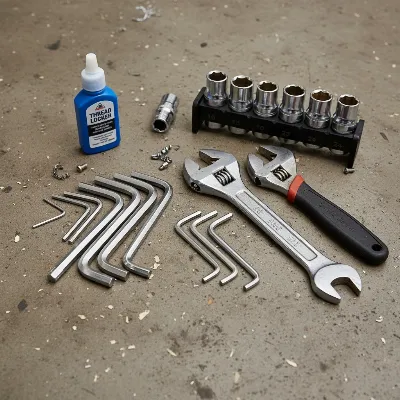 Essential tools for DIY weight bench repair including wrenches and Allen keys
II. Essential Tools for the Job
Before you begin, gather the necessary tools. Having these on hand will streamline the process and ensure you can perform the fixes safely and effectively.
- Allen Key Set: Most adjustable weight benches use Allen bolts for assembly and adjustable components.
- Socket Wrench Set (with various sizes): For tightening nuts and larger bolts. A ratchet mechanism will make the job much faster.
- Adjustable Wrench or Spanners: Useful for nuts and bolts that don’t fit your socket set perfectly.
- Rubber Mallet: To gently tap components into alignment if needed.
- Level: To check your floor and the bench itself for evenness.
- Non-Slip Pads or Exercise Mat: For addressing uneven flooring.
- Thread Locker (optional): For bolts that repeatedly come loose.
III. Step-by-Step DIY Fixes
Once you’ve identified the potential cause, follow these steps to restore your bench’s stability. Start with the simplest fixes and work your way through them.
A. The Universal Tightening Method
|
Our Picks for the Best Weight Bench in 2026
As an Amazon Associate I earn from qualifying purchases.
|
||
| Num | Product | Action |
|---|---|---|
| 1 | Assemble-Free Foldable Weight Bench Press for Home Gym, 660 LBS Capacity Incline Decline, Sit-up Bench for Full-Body Strength Training |

|
| 2 | Marcy Exercise Utility Bench for Upright, Incline, Decline, and Flat Exercise SB-261W , Black , 42.00 x 19.00 x 51.00 inches |
|
| 3 | Marcy Multi-Purpose Adjustable Workout Utility Weight Bench for Full Body Upright, Incline, Decline, and Flat Exercise SB-228 , 42.00 x 26.00 x 48.00 inches, Black |
|
| 4 | Adjustable Weight Bench, Foldable Workout Benches for Home Gym, 10 Backrest Position Exercise Bench for Strength Training, Upgraded Thickened Steel Support Max Capacity 700LBs |
|
| 5 | Adjustable Weight Bench - 1000LBS Capacity Heavy Duty Foldable Workout Bench for Full Body Exercise, Flat/Incline/Decline, Bench Press for Home Gym with Preacher Pad & Leg Extension |
|
| 6 | Adjustable Weight Bench for Home Gym, Foldable Workout Bench for Full Body Fitness Dumbbell Exercise, 600LBS Incline Decline Flat Bench with Resistance Bands for Strength Training |
|
| 7 | CAP Barbell Multi-Purpose Adjustable Utility Strength Training Weight Bench | Multiple Options |
|
| 8 | Yoleo Adjustable Weight Bench, 660LB Foldable Workout Bench with Extended Head/Neck Protection/Spine Support for Bench Press, Fast Folding Incline Decline Flat Bench |
|
| 9 | Amazon Basics Adjustable Workout Weight Bench Press, Foldable for Home Gym, Black |
|
| 10 | Yoleo Adjustable Weight Bench for Full Body Workout; Foldable Bench Press Bench of Home Gym Strength Training; Incline Decline Flat Utility Workout Bench with Quick Folding& Fast Adjustment (Black) |
|
This is the golden rule for fixing most wobbly benches, especially if you suspect loose fasteners or improper initial assembly.
- Clear the Area: Remove any weights or accessories from the bench.
- Place on a Level Surface: Move your bench to the most visibly level part of your gym floor. This is crucial for proper alignment.
- Loosen All Bolts (Finger-Tight): Using your Allen keys and wrenches, go around the entire bench and loosen every single bolt and screw until they are just finger-tight. You want them loose enough so that components have a bit of play and can self-align. Pay attention to the main frame connections, leg supports, and the hinges and adjustment points for the seat and backrest.
- Ensure Proper Orientation: Make sure the bench is sitting upright, with its feet firmly on the level ground, and the seat/backrest cushions facing the ceiling. If your bench has adjustable feet, ensure they are adjusted to their neutral position or slightly loosened as well.
- Systematic Tightening: Starting from the center of the bench and working outwards, or alternating sides (e.g., tighten a bolt on the left, then a corresponding bolt on the right), gradually tighten all bolts. Avoid cranking one bolt down completely before moving to the next. The goal is even pressure across all connections. For square or rectangular frames, follow an “X” pattern when tightening bolts on a single connection point (e.g., top-left, bottom-right, then top-right, bottom-left).
- Test Stability: Once all bolts are snug, give the bench a good shake. If it’s stable, great! If there’s still a slight wobble, try loosening and re-tightening again, paying extra attention to any points that still feel loose.
B. Addressing Uneven Surfaces
If the wobble persists after tightening, your floor is likely the culprit.
- Check with a Level: Place a level on the bench’s frame, both lengthwise and widthwise. This will clearly show which corner or side is low.
- Relocate the Bench: The simplest solution is to move the bench to a different spot on your floor that appears more level.
- Use Stabilizing Aids:
- Adjustable Feet: If your bench has screw-in adjustable feet or rubber caps that can be twisted, rotate the lowest foot outwards to raise that corner until the bench is level.
- Shims or Pads: For benches without adjustable feet, place small, firm non-slip pads, rubber stoppers, or even folded pieces of durable material (like old gym mat scraps) under the lowest leg(s). Add just enough to eliminate the wobble.
- Exercise Mat: A thick exercise mat can provide a uniformly stable surface and help cushion minor floor irregularities.
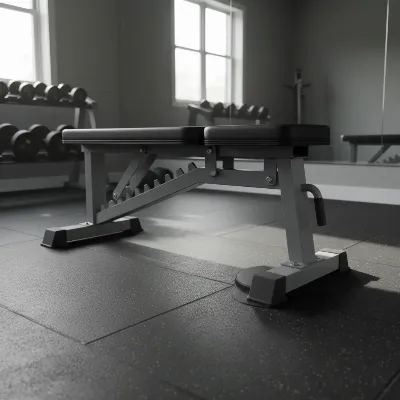 Adjustable weight bench on an uneven floor being leveled with rubber pads
C. Inspecting and Adjusting Components
Occasionally, specific parts might be the issue.
- Inspect Legs and Base Alignment: Visually check if the legs and base are properly aligned. If a leg appears twisted or skewed, loosen its connecting bolts slightly, reposition it, and then re-tighten.
- Check Adjustment Mechanisms: For the adjustable backrest and seat, ensure the locking pins or adjustment levers fully engage and hold the parts securely without excessive play. If the mechanism feels loose, there might be smaller bolts within the hinge or slide that need tightening (refer to your bench’s manual).
- Worn Feet: Examine the rubber feet or end caps. If they are worn, cracked, or missing, replace them to restore grip and stability. Many hardware stores carry universal replacement caps.
D. Advanced Solutions: Thread Locker and Part Replacement
For stubborn wobbles or recurring issues, these steps can offer a more permanent solution.
- Apply Thread Locker: If a specific bolt or set of bolts consistently loosens despite tightening, consider using a medium-strength liquid thread locker (like Loctite Blue). Apply a small amount to the threads of the bolt before reinserting and tightening it. This creates a secure bond that resists loosening from vibration but can still be disassembled with hand tools if needed.
- Replace Damaged Parts: If you discover visibly cracked welds, bent frame components, or excessively worn hinges/brackets, it might be time to replace those specific parts. Contact the manufacturer for replacement components. This is a crucial safety measure, as structural damage can lead to sudden failure.
IV. Preventative Maintenance for Lasting Stability
To keep your adjustable weight bench stable and safe for the long haul, make routine maintenance a habit.
- Monthly Checks: Add a quick inspection to your calendar once a month. Go through all critical connection points and give each one a light wiggle test. Tighten any bolts that feel loose.
- Cleanliness: Dust and grime can build up in joints and moving parts. Wipe down the frame and mechanisms regularly to prevent debris from interfering with function.
- Lubrication: For moving parts or adjustment mechanisms, a light spray of silicone lubricant can ensure smooth operation and prevent wear.
- Proper Storage: When not in use, store your bench in a dry, level area to prevent moisture-related damage or frame warping.
V. When to Consider Replacement
While most wobbles are fixable, there comes a point where repairs may no longer be sufficient or safe.
- Persistent Instability: If your bench continues to wobble despite thorough tightening, leveling, and inspection, it may indicate deeper, unseen structural damage.
- Visible Structural Damage: Any visible cracks in the frame, bent metal, or compromised welds are serious safety hazards. Do not continue using a bench with such damage.
- Excessive Wear: If multiple components are worn out or broken, the cost and effort of replacement parts might outweigh buying a new, safer bench.
A stable adjustable weight bench is paramount for effective and safe strength training. By understanding the common causes of wobbling and applying these DIY fixes, you can quickly restore your bench to a secure foundation, allowing you to focus on your lifts with confidence. safety should always be your top priority in the gym.
Frequently Asked Questions
What are the most common reasons an adjustable weight bench wobbles?
The most common reasons an adjustable weight bench wobbles are loose fasteners, uneven flooring, or improper assembly. Over time, bolts and screws can loosen due to vibrations, or the bench may be placed on an irregular surface, causing instability.
What tools are essential for fixing a wobbly weight bench?
Essential tools for fixing a wobbly weight bench include an Allen key set, a socket wrench set, an adjustable wrench, a rubber mallet, and a level. These tools help in tightening bolts, aligning components, and checking for evenness.
How can I fix a weight bench that wobbles due to an uneven floor?
To fix a weight bench that wobbles due to an uneven floor, first check the floor with a level. Then, relocate the bench to a more level spot, or use stabilizing aids like adjustable feet, non-slip pads, or a thick exercise mat under the lowest leg(s) to achieve balance.
When should I consider replacing my adjustable weight bench instead of repairing it?
You should consider replacing your adjustable weight bench if it exhibits persistent instability despite thorough repairs, visible structural damage like cracks or bent metal, or excessive wear on multiple critical components. These issues can compromise safety during workouts.
Can thread locker help prevent bolts from loosening on my weight bench?
Yes, applying a medium-strength liquid thread locker, such as Loctite Blue, to the threads of bolts can help prevent them from loosening due to vibration. This creates a secure bond while still allowing for disassembly with hand tools if needed for future adjustments or repairs.
Fix a Wobbly Adjustable Weight Bench
Learn how to quickly identify and fix common causes of a wobbly adjustable weight bench using simple DIY methods and tools to ensure a stable and safe workout environment.
Remove all weights and accessories from the bench and place it on a level surface. Loosen every bolt and screw until finger-tight, allowing components to self-align. Systematically tighten all bolts, starting from the center and working outwards, or alternating sides, to ensure even pressure.
If the wobble persists, use a level to check your floor and the bench frame. Relocate the bench to a more level spot if possible. Alternatively, use stabilizing aids like adjustable feet, non-slip pads, or shims under the lowest leg(s) to balance the bench.
Visually inspect the legs and base for proper alignment; loosen and reposition if skewed. Check adjustment mechanisms for the backrest and seat to ensure locking pins engage securely. Replace worn, cracked, or missing rubber feet or end caps to restore grip and stability.
For bolts that repeatedly come loose, apply a small amount of medium-strength liquid thread locker (e.g., Loctite Blue) to the threads before reinserting and tightening. This creates a secure bond that resists vibration but allows for future disassembly with hand tools.

My bench had a slight wobble that was really annoying during dumbbell rows. I followed the advice about checking the floor for unevenness and realized that was my main problem. A simple rubber mat under one leg fixed it right up. It’s much better now, though I still wish the bench itself felt a little heavier duty. Good practical advice here.
This was exactly what I needed! My bench started wobbling after I moved it, and I couldn’t figure out why. The section on identifying the root cause of instability was spot on. Turns out, one of the leveling feet was just a bit off. Quick adjustment and it’s perfectly stable again for all my strength training. Thanks for the clear, easy-to-follow steps!
I tried all the suggestions for my cheap Amazon bench, especially the part about checking for bent or damaged frame components. While tightening everything helped a bit, there’s still a slight give in the frame itself that I can’t seem to fix. It’s definitely safer than before, but not perfectly rock-solid. I guess some benches are just built to wobble a little.
I was about to toss my old adjustable bench because it was getting so unstable, especially when I was doing incline presses. This guide was a lifesaver! The tip about checking the bolts and tightening them in a specific order made a huge difference. My bench feels brand new and super solid now. Definitely recommend trying these fixes before buying a new one.