Assembling a new weight bench safely at home involves careful preparation, systematic assembly, and thorough post-assembly checks to ensure stability and prevent injury. The process typically takes 1-2 hours for most models and requires basic tools like wrenches and screwdrivers. Proper assembly is crucial for the longevity of the equipment and user safety during workouts.
Pre-Assembly Essentials
Before you even open the box, a little preparation goes a long way in making the assembly process smooth and safe. Taking the time to organize and prepare can prevent frustration and ensure you don’t miss any critical steps.
Unboxing and Inventory
Begin by carefully unboxing your new weight bench. Lay out all components in a clear, organized manner. Remove all fittings from their plastic bags and group them by type (e.g., screws, bolts, washers, nuts, pins). Cross-reference every part against the manufacturer’s parts list provided in your owner’s manual to confirm everything is present. Any damage or missing parts should be reported to the seller immediately, before proceeding with assembly or use.
Gathering Tools
While most weight benches come with basic tools like L-wrenches, you might find the process easier with your own set of appropriate tools. Essential tools often include wrenches, screwdrivers, and possibly a socket set for quicker and more secure tightening. Using suitable tools is critical for proper assembly and ensuring all connections are securely mounted.
Choosing Your Assembly Space
Select an assembly area that is spacious, stable, and level. It is highly recommended to assemble the weight bench in the exact location where it will be used, as moving a fully assembled bench can be challenging due to its size and weight. Ensure there’s ample clearance around the bench for comfortable movement during assembly. Keep children and pets away from the work area to prevent accidents, as small parts can pose a choking hazard.
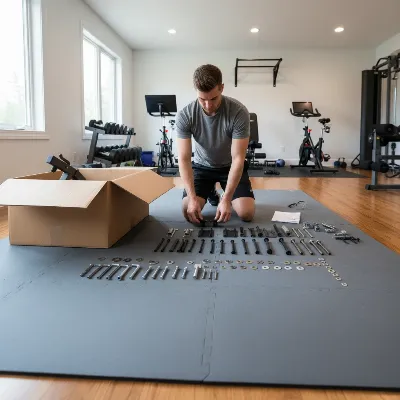 Man preparing parts and tools on a mat before assembling a weight bench for home gym safety
Safety First: A Crucial Reminder
Safety during assembly is paramount. The installation process should always be carried out by adults. Ideally, assembly is best performed by two persons, as some components can be heavy or awkward to handle alone. Avoid making any modifications to the equipment that could compromise its security or stability. Always consult your physician before starting any exercise program, especially if you are pregnant or have existing physical injuries.
Step-by-Step Assembly Guide
With your preparation complete, you can now proceed with assembling your weight bench. Always refer to your specific product’s owner’s manual for detailed instructions, as models can vary.
Frame Construction: Base and Stabilizers
|
Our Picks for the Best Weight Bench in 2026
As an Amazon Associate I earn from qualifying purchases.
|
||
| Num | Product | Action |
|---|---|---|
| 1 | Yoleo Adjustable Weight Bench, 660LB Foldable Workout Bench with Extended Head/Neck Protection/Spine Support for Bench Press, Fast Folding Incline Decline Flat Bench |

|
| 2 | Marcy Exercise Utility Bench for Upright, Incline, Decline, and Flat Exercise SB-261W , Black , 42.00 x 19.00 x 51.00 inches |
|
| 3 | Adjustable Weight Bench, Foldable Workout Benches for Home Gym, 10 Backrest Position Exercise Bench for Strength Training, Upgraded Thickened Steel Support Max Capacity 700LBs |
|
| 4 | Adjustable Weight Bench for Home Gym, Foldable Workout Bench for Full Body Fitness Dumbbell Exercise, 600LBS Incline Decline Flat Bench with Resistance Bands for Strength Training |
|
| 5 | Yoleo Adjustable Weight Bench for Full Body Workout; Foldable Bench Press Bench of Home Gym Strength Training; Incline Decline Flat Utility Workout Bench with Quick Folding& Fast Adjustment (Black) |
|
| 6 | Marcy Multi-Purpose Adjustable Workout Utility Weight Bench for Full Body Upright, Incline, Decline, and Flat Exercise SB-228 , 42.00 x 26.00 x 48.00 inches, Black |
|
| 7 | CAP Barbell Multi-Purpose Adjustable Utility Strength Training Weight Bench | Multiple Options |
|
| 8 | Assemble-Free Foldable Weight Bench Press for Home Gym, 660 LBS Capacity Incline Decline, Sit-up Bench for Full-Body Strength Training |
|
| 9 | Adjustable Weight Bench - 1000LBS Capacity Heavy Duty Foldable Workout Bench for Full Body Exercise, Flat/Incline/Decline, Bench Press for Home Gym with Preacher Pad & Leg Extension |
|
| 10 | Amazon Basics Adjustable Workout Weight Bench Press, Foldable for Home Gym, Black |
|
The foundation of your weight bench is its frame. Start by assembling the main base components, often involving connecting the main horizontal support to the front and rear stabilizers. Align the mounting holes precisely and insert the specified screws or bolts. For components secured with nylon insert lock nuts, ensure the side with the blue nylon ring faces outward. Turn bolts or nuts clockwise to tighten them. Tighten these initial connections securely, but avoid overtightening until the entire frame is loosely assembled to allow for minor adjustments.
Attaching the Seat and Backrest
Next, attach the seat and backrest pads to the main frame. These typically involve aligning pre-drilled holes on the pads with the corresponding fixing points on the bench support. Use the provided hexagon screws and L-wrench or your own tools to secure them. Make sure the four mounting holes on the bench support align perfectly with the fixing holes on the seat pad to prevent any wobbling or instability later.
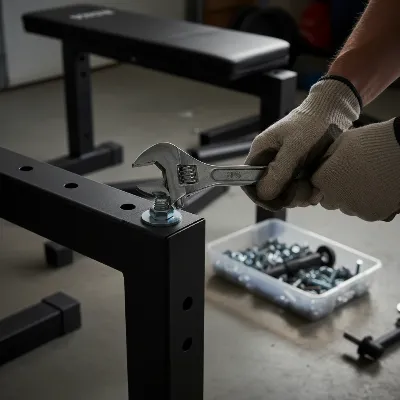 Close-up of hands tightening bolts on a weight bench frame during assembly, ensuring secure connections
Installing Adjustable Components
If your weight bench is adjustable, this phase is critical for its versatile functionality. This usually involves attaching mechanisms like a ladder-style bracket or a metal bar with pre-drilled holes for angle adjustments. When installing adjustable parts, such as the headrest pad or leg hold-down, ensure that any adjusting pins or balling locking pins are fully seated in their designated holes or slots. This full engagement is vital to prevent accidental dislodgement and potential injury during use. Slide any foam pads onto leg pad bars securely.
Final Tightening and Inspection
Once all major components are in place, go back and systematically tighten every bolt, screw, and nut according to the manufacturer’s instructions. A common practice is to hand-tighten everything initially, then perform a final tightening pass with appropriate tools. Ensure all connections are uniformly secure. Check the entire frame for any signs of cracking, permanent bending, or loose elements. A thorough final inspection is your last opportunity to prevent stability issues.
Post-Assembly Safety & Maintenance
Your weight bench is assembled, but your responsibility for safety doesn’t end there. Regular checks and mindful usage are key to a safe and effective workout environment.
Initial Stability Check
Before using the bench with any weights, perform an initial stability test. Gently apply your body weight to various parts of the bench, checking for any wobbles, creaks, or shifts. Ensure the bench is on a stable and level base; some benches include leveling knobs which can be adjusted to prevent instability on uneven floors. If placing the bench on smooth flooring, consider adding non-slip rubber feet.
Regular Inspections and Care
Make it a habit to inspect your weight bench before every training session. Check all screws, bolts, and pins for any signs of looseness and reinforce them with suitable tools if needed. Look for any wear and tear on the frame, padding, or moving parts. Replace any worn or damaged components immediately. Proper maintenance extends the life of your equipment and guarantees a safe workout.
Safe Usage Practices
Always use the weight bench for its intended purpose in a private environment. Keep hands and feet away from moving parts during adjustments or exercises. Wear athletic shoes for foot protection. Ensure adequate clearance around the weight bench to mount, dismount, and use it safely. If children are present, provide close supervision and never leave them unattended on the weight bench. Be aware of your body’s signals during exercise; stop immediately if you experience pain, dizziness, or unusual discomfort, and consult a doctor before continuing.
Assembling your new weight bench safely at home is a manageable DIY task that lays the groundwork for countless effective workouts. By following these preparation, assembly, and safety guidelines, you can ensure your equipment is a secure and reliable part of your fitness journey. Enjoy building strength and achieving your goals with confidence!
Frequently Asked Questions
How long does it take to assemble a new weight bench?
Assembling a new weight bench typically takes between 1 to 2 hours, depending on the model's complexity and your familiarity with tools. It's recommended to have two adults for easier and safer assembly.
What tools are needed to assemble a weight bench?
Most weight benches include basic L-wrenches, but having your own set of wrenches, screwdrivers, and a socket set can make the process quicker and more secure. Always refer to your specific product's manual for required tools.
Where is the best place to assemble a weight bench?
The best place to assemble a weight bench is in the exact location where it will be used. Choose a spacious, stable, and level area to avoid the difficulty of moving a fully assembled bench due to its size and weight.
How do I ensure my assembled weight bench is stable?
After assembly, perform an initial stability test by gently applying your body weight to various parts of the bench, checking for wobbles or creaks. Ensure it's on a level surface and consider adding non-slip rubber feet if on smooth flooring.
How often should I inspect my weight bench for safety?
You should inspect your weight bench before every training session. Check all screws, bolts, and pins for looseness, and look for any wear and tear on the frame or padding. Replace damaged components immediately.
Assemble a New Weight Bench Safely at Home
This guide provides essential steps and safety considerations for successfully assembling your new weight bench at home, ensuring stability and longevity.
Carefully unbox your weight bench and lay out all components. Group fittings by type and cross-reference them with the manufacturer's parts list to ensure everything is present. Report any missing or damaged parts before proceeding.
Begin by assembling the main base components, connecting horizontal supports to front and rear stabilizers. Align mounting holes precisely and insert screws or bolts, ensuring nylon lock nuts face outward. Tighten connections securely but avoid overtightening until the entire frame is loosely assembled.
Next, secure the seat and backrest pads to the main frame. Align pre-drilled holes on the pads with the bench support's fixing points. Use provided hexagon screws and an L-wrench or your own tools to ensure a secure, wobble-free attachment.
If your bench has adjustable features, attach mechanisms like ladder brackets or leg hold-downs. Ensure all adjusting pins or ball locking pins are fully seated in their designated holes to prevent accidental dislodgement during use. Slide foam pads onto leg pad bars securely.
Once all major components are in place, systematically tighten every bolt, screw, and nut according to the manufacturer's instructions. Conduct a thorough final inspection for any signs of cracking, bending, or loose elements to ensure overall stability and safety.

I appreciated the emphasis on safety, especially the part about preventing injury. My bench came with pretty vague instructions, so I relied on this for the general steps. However, I still found myself struggling a bit with some of the trickier bolts, even with my own wrenches. It would have been nice if there were more specific tips for really stubborn parts.
I’ve assembled a few pieces of home gym equipment over the years, and this was a great refresher. The systematic assembly approach really works, especially for larger items like a weight bench. Taking the time for pre-assembly essentials, like organizing all the parts, makes the actual build go so much faster and smoother. My new bench feels rock solid.
This guide was super helpful for my new Bowflex bench. I always struggle with instructions, but the tip about doing a thorough post-assembly check for stability was something I hadn’t really thought about before. It gave me peace of mind knowing everything was tight and secure before my first workout. Definitely recommend taking the time to do it right.
I just got a new adjustable bench and was dreading putting it together. Following the advice here about laying out all the components and grouping the fittings by type made a huge difference. It really cut down on the confusion and I felt much more confident that I wasn’t missing anything. The whole process took me about an hour and a half, just like it mentioned.