Choosing between a flat and an adjustable weight bench for your home gym depends on your fitness goals, available space, and budget. Flat benches offer superior stability for heavy foundational lifts and are generally more affordable, while adjustable benches provide unparalleled versatility for targeting various muscle groups with a wider range of exercises, including incline and decline movements. For example, an adjustable bench can expand your exercise library by over 50% compared to a flat bench, allowing for comprehensive muscle development.
The Flat Weight Bench: Stability and Simplicity
The flat weight bench is the most straightforward option, featuring a fixed horizontal platform. Its simplicity is its greatest strength, offering an unwavering base for heavy lifts and foundational movements. Powerlifters, for instance, often favor flat benches for competition bench presses due to their inherent stability. This robust, no-frills design means fewer moving parts, translating into superior durability and less maintenance over time.
A flat bench is an excellent choice for exercises requiring maximum stability, such as heavy flat dumbbell presses, barbell bench presses, and dumbbell rows. Beyond upper body work, it’s also highly effective for lower body and core exercises like hip thrusts, step-ups, and lying leg raises. Many flat benches are also relatively compact and lightweight, making them easier to move and store when not in use, which can be a significant advantage for home gyms with limited space. Furthermore, flat benches are typically more affordable, offering a cost-effective entry point into serious strength training. For home gym buying guides on this site.
However, the primary limitation of a flat bench is its lack of adjustability. Being fixed in a single position means you cannot perform incline or decline variations of exercises, which restricts the range of muscle groups you can effectively target and limits overall exercise variety. While stable, some users, particularly taller individuals, might find certain exercises less comfortable due to the fixed height.
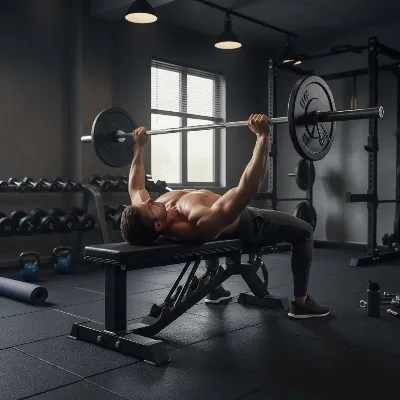 A flat weight bench with a barbell and heavy weights, set up for a bench press in a home gym, emphasizing stability and strength training.
The Adjustable Weight Bench: Versatility and Comprehensive Training
An adjustable weight bench, often referred to as an FID (Flat, Incline, Decline) bench, offers unparalleled versatility. Its defining feature is the ability to change the angle of the backrest and often the seat, allowing you to transition between flat, incline, and decline positions. This adjustability unlocks a vast library of exercises, making it possible to target different muscle fibers and portions of muscle groups that a flat bench cannot. For instance, incline presses emphasize the upper chest, while decline movements focus on the lower pectorals.
This extensive exercise variety makes adjustable benches ideal for bodybuilders, general fitness enthusiasts, and anyone seeking a comprehensive full-body workout. Exercises like incline dumbbell presses, decline crunches, seated shoulder presses, and chest-supported rows become possible, significantly expanding your training regimen. Investing in a quality adjustable bench can also be a space and cost-saving solution, as it can effectively replace several single-purpose pieces of equipment like dedicated incline or decline benches. Many modern adjustable benches also feature foldable designs and transport wheels, offering excellent portability and storage solutions for compact home gyms.
However, the increased functionality of an adjustable bench typically comes at a higher price point than a flat bench. While high-quality adjustable benches can be very stable, the presence of multiple moving parts and adjustment mechanisms means they can potentially be less stable than a solid flat bench, especially cheaper models. It’s crucial to look for robust construction, secure locking mechanisms (like ladder or pop-pin systems), and a wide base to ensure stability during heavy use.
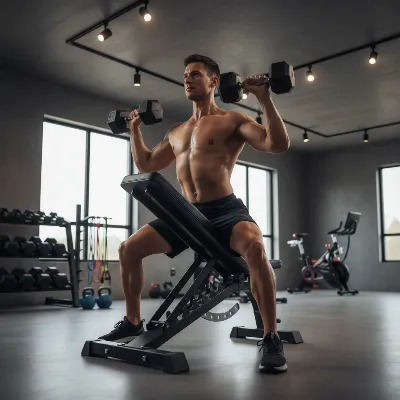 An adjustable weight bench set to an incline position, with a person performing dumbbell presses in a modern home gym setting, illustrating versatility and muscle targeting.
Key Factors to Consider When Choosing
|
Our Picks for the Best Weight Bench in 2026
As an Amazon Associate I earn from qualifying purchases.
|
||
| Num | Product | Action |
|---|---|---|
| 1 | Marcy Exercise Utility Bench for Upright, Incline, Decline, and Flat Exercise SB-261W , Black , 42.00 x 19.00 x 51.00 inches |

|
| 2 | Adjustable Weight Bench - 1000LBS Capacity Heavy Duty Foldable Workout Bench for Full Body Exercise, Flat/Incline/Decline, Bench Press for Home Gym with Preacher Pad & Leg Extension |
|
| 3 | Yoleo Adjustable Weight Bench for Full Body Workout; Foldable Bench Press Bench of Home Gym Strength Training; Incline Decline Flat Utility Workout Bench with Quick Folding& Fast Adjustment (Black) |
|
| 4 | Assemble-Free Foldable Weight Bench Press for Home Gym, 660 LBS Capacity Incline Decline, Sit-up Bench for Full-Body Strength Training |
|
| 5 | Marcy Multi-Purpose Adjustable Workout Utility Weight Bench for Full Body Upright, Incline, Decline, and Flat Exercise SB-228 , 42.00 x 26.00 x 48.00 inches, Black |
|
| 6 | Amazon Basics Adjustable Workout Weight Bench Press, Foldable for Home Gym, Black |
|
| 7 | Adjustable Weight Bench for Home Gym, Foldable Workout Bench for Full Body Fitness Dumbbell Exercise, 600LBS Incline Decline Flat Bench with Resistance Bands for Strength Training |
|
| 8 | Adjustable Weight Bench, Foldable Workout Benches for Home Gym, 10 Backrest Position Exercise Bench for Strength Training, Upgraded Thickened Steel Support Max Capacity 700LBs |
|
| 9 | Yoleo Adjustable Weight Bench, 660LB Foldable Workout Bench with Extended Head/Neck Protection/Spine Support for Bench Press, Fast Folding Incline Decline Flat Bench |
|
| 10 | CAP Barbell Multi-Purpose Adjustable Utility Strength Training Weight Bench | Multiple Options |
|
When deciding between a flat and an adjustable weight bench, consider these critical factors:
- Training Goals: If your primary focus is powerlifting, maximizing heavy lifts, or building foundational strength with classic compound movements, a flat bench offers the superior stability and solid base you need. If your goals involve comprehensive muscle targeting, bodybuilding, hypertrophy, and a wide variety of exercises to hit every muscle fiber from different angles, an adjustable bench is the clear winner.
- Space and Portability: For very limited spaces where the bench needs to be moved or tucked away regularly, a foldable adjustable bench or a compact flat bench with transport wheels will be advantageous. If you have a dedicated gym space, a larger, non-folding option for either type is feasible.
- Budget: Flat benches generally provide more bang for your buck if you’re on a tight budget, offering excellent stability and durability at a lower cost. Adjustable benches require a larger investment, but their versatility can justify the cost by negating the need for multiple specialized benches.
- Stability and Build Quality: Regardless of type, never compromise on build quality. For flat benches, look for a sturdy, welded frame. For adjustable benches, prioritize secure adjustment mechanisms (ladder or pop-pin systems), minimal wobble, and a high weight capacity to ensure safety and longevity, especially if you plan to lift heavy.
Conclusion
There isn’t a universally “better” weight bench; the optimal choice depends entirely on your individual needs and aspirations. If you are a powerlifter or a strength enthusiast who prioritizes maximum stability for heavy, foundational lifts and operates within a tighter budget, a high-quality flat bench will serve you exceptionally well. Conversely, if you seek extensive exercise variety, aim for comprehensive muscle development across different angles, and have the budget and space for a more versatile piece of equipment, an adjustable weight bench is an indispensable tool for elevating your home workouts.
Frequently Asked Questions
What is the main difference between a flat and an adjustable weight bench?
The main difference is adjustability. A flat weight bench has a fixed horizontal platform, offering maximum stability for foundational lifts. An adjustable weight bench, also known as an FID bench, allows you to change the backrest and seat angles to flat, incline, and decline positions, enabling a wider variety of exercises.
Which type of weight bench is better for powerlifting and heavy lifting?
A flat weight bench is generally better for powerlifting and heavy lifting due to its inherent stability and fixed design. Its robust construction provides an unwavering base, which is crucial for exercises like competition bench presses, where maximum stability is paramount.
Can an adjustable weight bench replace multiple pieces of gym equipment?
Yes, a quality adjustable weight bench can effectively replace several single-purpose pieces of equipment, such as dedicated incline or decline benches. Its versatility allows for a comprehensive range of exercises, making it a space and cost-saving solution for many home gyms.
What are the key considerations when choosing a weight bench for a home gym?
When choosing a weight bench, consider your training goals (e.g., powerlifting vs. bodybuilding), available space and portability needs, budget, and the overall stability and build quality of the bench. Prioritize secure locking mechanisms and a high weight capacity for adjustable benches.
Are flat benches more affordable than adjustable benches?
Yes, flat benches are typically more affordable than adjustable benches. They offer a cost-effective entry point into serious strength training, providing excellent stability and durability at a lower price point compared to the increased functionality and higher investment required for an adjustable model.

I was really torn between a flat and an adjustable bench for my small home gym. After reading about the versatility, I went with an adjustable one, and it’s been a game-changer. Being able to do incline presses and decline crunches has really expanded my workouts, just like it mentioned. It feels super sturdy too, even when I’m lifting heavy.
My budget was pretty tight, so I was leaning towards a flat bench initially. But after seeing how much an adjustable one could expand my exercise library, I decided to save up a bit more. It was totally worth it! I can hit so many different muscle groups now, and it feels really well-built for the price point.
I got an adjustable bench hoping to do a ton more exercises, but honestly, some of the decline positions feel a little awkward for me. It’s great for incline work, and it does save space compared to having multiple benches. I just wish the padding was a bit thicker; after a long session, it can feel a little hard on my back.
I’ve had my flat bench for about six months now, and it’s exactly what I needed for my powerlifting routine. The stability for heavy foundational lifts is no joke; it feels incredibly solid. I appreciate the simplicity and how it doesn’t take up too much space. Definitely a good choice if you’re focused on those core movements.