Building your own wooden weight bench at home can be a rewarding project, offering the satisfaction of creating something with your own hands while potentially saving money and customizing equipment to your exact needs. A homemade bench allows for a perfect fit for your body size, training style, and available space, unlike many commercial options that come with unnecessary features or a prohibitive price tag. The key to a successful DIY weight bench lies in prioritizing safety and stability, ensuring it can withstand rigorous workouts for years to come.
Why Build Your Own Weight Bench?
Opting for a DIY weight bench provides a unique blend of benefits. Foremost among them is customization; you can tailor the dimensions, materials, and even aesthetic to perfectly complement your home gym setup. This level of personalization is rarely found in off-the-shelf products. Furthermore, constructing your own equipment can be a cost-effective alternative to purchasing new, often expensive, commercial benches, especially if you have some lumber readily available. Beyond the practical advantages, there’s immense satisfaction in building functional fitness equipment that you’ll use regularly, fostering a deeper connection with your training environment.
Essential Tools and Materials
A sturdy and safe DIY weight bench relies on the right materials and tools. Most homemade benches are crafted from wood due to its affordability, strength, and ease of workability.
Lumber
For the primary structure, you will typically need:
- 2×4 and 2×6 lumber: These are ideal for the bench frame, legs, and support beams, providing robust structural integrity.
- 4×4 planks: Can be used for uprights or additional leg support in more complex designs.
- ¾” plywood: This will serve as the top platform or base for your padded surface, offering a solid foundation.
|
Our Picks for the Best Weight Bench in 2026
As an Amazon Associate I earn from qualifying purchases.
|
||
| Num | Product | Action |
|---|---|---|
| 1 | Adjustable Weight Bench for Home Gym, Foldable Workout Bench for Full Body Fitness Dumbbell Exercise, 600LBS Incline Decline Flat Bench with Resistance Bands for Strength Training |

|
| 2 | Amazon Basics Adjustable Workout Weight Bench Press, Foldable for Home Gym, Black |
|
| 3 | Marcy Multi-Purpose Adjustable Workout Utility Weight Bench for Full Body Upright, Incline, Decline, and Flat Exercise SB-228 , 42.00 x 26.00 x 48.00 inches, Black |
|
| 4 | Assemble-Free Foldable Weight Bench Press for Home Gym, 660 LBS Capacity Incline Decline, Sit-up Bench for Full-Body Strength Training |
|
| 5 | Yoleo Adjustable Weight Bench, 660LB Foldable Workout Bench with Extended Head/Neck Protection/Spine Support for Bench Press, Fast Folding Incline Decline Flat Bench |
|
| 6 | Marcy Exercise Utility Bench for Upright, Incline, Decline, and Flat Exercise SB-261W , Black , 42.00 x 19.00 x 51.00 inches |
|
| 7 | CAP Barbell Multi-Purpose Adjustable Utility Strength Training Weight Bench | Multiple Options |
|
| 8 | Adjustable Weight Bench - 1000LBS Capacity Heavy Duty Foldable Workout Bench for Full Body Exercise, Flat/Incline/Decline, Bench Press for Home Gym with Preacher Pad & Leg Extension |
|
| 9 | Adjustable Weight Bench, Foldable Workout Benches for Home Gym, 10 Backrest Position Exercise Bench for Strength Training, Upgraded Thickened Steel Support Max Capacity 700LBs |
|
| 10 | Yoleo Adjustable Weight Bench for Full Body Workout; Foldable Bench Press Bench of Home Gym Strength Training; Incline Decline Flat Utility Workout Bench with Quick Folding& Fast Adjustment (Black) |
|
Hardware
- Screws: 2.5-inch deck screws (T-25 star head recommended) are excellent for strong wood-to-wood connections.
- Bolts: Elevator bolts (at least 1.5 inches long) with matching wingnuts can be used for securing uprights or for adjustable components, though a flat bench typically requires fewer bolts.
- Wood glue: Essential for reinforcing joints and adding significant strength and stability to the entire structure.
- Strong adhesive: Such as Gorilla glue, useful for bonding different materials or for additional reinforcement.
Padding and Upholstery
- High-density foam padding: Crucial for comfort and support during exercises.
- Durable fabric: Vinyl, leather, or automotive/furniture upholstery fabric will cover the foam, protecting it and providing a finished look.
- Spray adhesive: To secure the foam to the plywood and prevent shifting.
- Staple gun and staples: For neatly attaching the upholstery fabric to the underside of the plywood.
Tools
A few basic woodworking tools will make the project manageable:
- Saw: A circular saw, miter saw (for precise 2×4 cuts), or even a sturdy handsaw for cutting lumber and plywood.
- Drill: A cordless drill is essential for pre-drilling holes and driving screws. A paddle bit or Forstner bit may be needed for larger holes.
- Measuring tape, pencil, and protractor: For accurate measurements and markings.
- Clamps: G-clamps help hold pieces together securely while assembling or gluing.
- Sander or sandpaper: For smoothing rough edges and preparing wood for finishing.
- Safety gear: Always wear safety glasses, ear protectors, and a face mask when cutting or drilling.
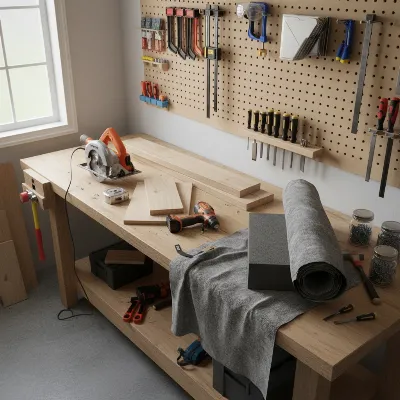 Essential tools and materials for building a DIY wood weight bench safely at home
Critical Dimensions for Safety and Performance
Adhering to standard dimensions is paramount for both safety and effectiveness when building a weight bench. These measurements ensure proper support, stability, and biomechanics during your lifts.
- Length: Aim for approximately 45–50 inches. This length provides adequate support for your entire back and head during exercises like the bench press.
- Width: A width of 10–12 inches is ideal. It’s wide enough to support your torso comfortably without restricting shoulder movement.
- Height: The bench should be 16–18 inches high. This height allows your feet to remain flat on the floor, providing a stable base and ensuring proper leg drive for various exercises.
These dimensions closely mirror those found in commercial-grade exercise benches, ensuring your homemade version feels familiar and effective during your workouts. Deviation from these standards can compromise stability and potentially lead to injury.
Step-by-Step Guide to Building Your Bench
Constructing your weight bench involves several key stages, each requiring attention to detail to ensure the final product is safe and durable.
1. Preparation and Cutting
Begin by accurately measuring and marking all your wood pieces according to your chosen dimensions. Use a reliable saw to cut the lumber for the frame (side rails, cross supports), legs, and the plywood top. Precision here is crucial for a stable final structure. Remember to cut two side rails, two end pieces for the frame, and four legs. The plywood top should match the length and width of your assembled frame.
2. Assembling the Frame
Build a sturdy rectangular base using your cut frame pieces. Apply wood glue to all joining surfaces before driving screws. This creates a much stronger bond than screws alone. For added stability, consider cutting and attaching cross-supports within the frame, especially in the middle and near the ends, to prevent any flexing. Ensure all corners are square and the frame is level. Once the base is assembled, attach the four legs securely to the corners. You might consider using carriage bolts for leg attachments for superior strength, though long deck screws combined with wood glue can also be very effective. Reinforce leg joints with additional bracing if possible.
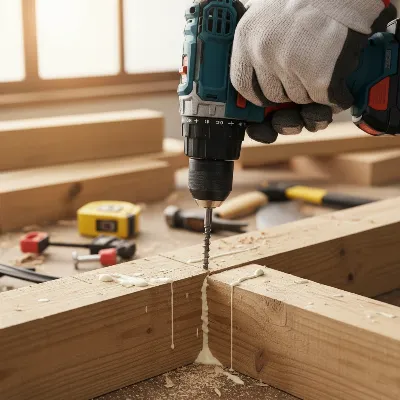 A person securely assembling the wooden frame of a DIY weight bench in a home workshop
3. Attaching the Top Platform
Once the frame and legs are securely assembled and the glue has dried, place your ¾” plywood top onto the frame. Align it carefully, ensuring it is flush with the edges or with an even overhang if desired. Pre-drill pilot holes to prevent wood splitting before driving screws through the plywood into the frame. Drive screws every 6-8 inches around the perimeter and along any internal cross-supports to ensure the top is firmly attached and won’t wobble under weight. Double-check for evenness and strength at this stage.
4. Crafting the Padded Top
This step enhances comfort and aesthetics. First, cut your high-density foam padding to the exact dimensions of your plywood top. Apply spray adhesive to the plywood and carefully place the foam on top, pressing firmly to ensure it adheres well. Next, cut your chosen upholstery fabric. It needs to be large enough to cover the foam and wrap around the edges of the plywood, with enough excess to be stapled to the underside. A good rule of thumb is to cut the fabric about 2 inches larger on each side than the plywood base. Lay the fabric face down, center the plywood and foam on top, then carefully pull the fabric taut, wrapping it around the edges, and staple it securely to the underside of the plywood. Pay attention to the corners, folding them neatly to avoid bulk. For a professional finish, round off the corners of the plywood base before adding foam and fabric.
5. Finishing and Safety Checks
After the bench is fully assembled, inspect all joints and connections to ensure everything is tight and secure. Sand down any rough edges or splinters on the wooden frame to prevent snags or injuries. You may optionally paint or seal the wood to protect it from moisture and give it a polished appearance. Finally, and most importantly, perform rigorous stability and weight capacity tests. Press down firmly on different parts of the bench, rock it gently, and even sit on it to check for any wobbling or weak points. If you plan to lift heavy weights, simulate the load to ensure the bench can safely support your body weight plus the anticipated lifting weight.
Safety First: Crucial Considerations
Safety should always be your top priority when building and using a DIY weight bench.
- Structural Integrity: Use only high-quality, knot-free lumber. Weak spots can compromise the entire structure. Ensure all screws are fully driven and all glued joints are cured. Reinforcing every joint with both glue and mechanical fasteners is a best practice.
- Weight Capacity: Understand that a bench must support not only the weights you lift but also your body weight. Many inexpensive commercial benches are rated for 300 lbs total, which might be insufficient if you weigh 150 lbs and lift 150 lbs. Overbuild your bench to have a higher margin of safety.
- Stability: A wobbly bench is a dangerous bench. Ensure all legs are even and firmly attached. Cross-bracing the legs can significantly enhance stability. Test the bench thoroughly before any serious lifting.
- Construction Safety: Always wear appropriate personal protective equipment, including safety glasses to protect against flying debris, ear protection from loud tools, and a dust mask when cutting or sanding wood. Pre-drilling pilot holes for screws will prevent wood from splitting and ensure stronger connections.
Enhancing Your DIY Bench (Optional)
While a flat bench is excellent for many exercises, you can consider more advanced features if you have the skills and desire. Adding an adjustable incline/decline mechanism typically involves more complex joinery, precise drilling for pins, and often metal components. Similarly, incorporating wheels and a handle can make your bench more mobile, allowing for easier storage and repositioning in your home gym. These enhancements, while adding versatility, also increase the complexity and time required for the build.
Building your own wooden weight bench is a rewarding endeavor that empowers you with a personalized and robust piece of fitness equipment. By meticulously following safety guidelines, using appropriate materials, and paying close attention to dimensions and construction techniques, you can create a sturdy and reliable bench that will support your strength training journey for many years to come. Enjoy the process of building and the strength you’ll gain from your custom-made home gym essential.
